Farmhouse Chandelieria

The dedicated authority on one fixture school

The Black Candle-Style Farmhouse Chandelier, Done Right

Most farmhouse chandelier pages are filter grids: forty thumbnails, zero guidance. This page is the opposite — one fixture school taken seriously. The black candle-style chandelier, five candelabra lights on an open metal frame, is the single piece that makes a farmhouse dining room read finished, and everything on this page exists to help you choose, size, and live with one.

Below the fixture itself you will find the sizing method — table width to diameter to hanging height, with worked numbers — plus the candelabra bulb guidance and finish-coordination advice that no ranking page in this category bothers to write down.

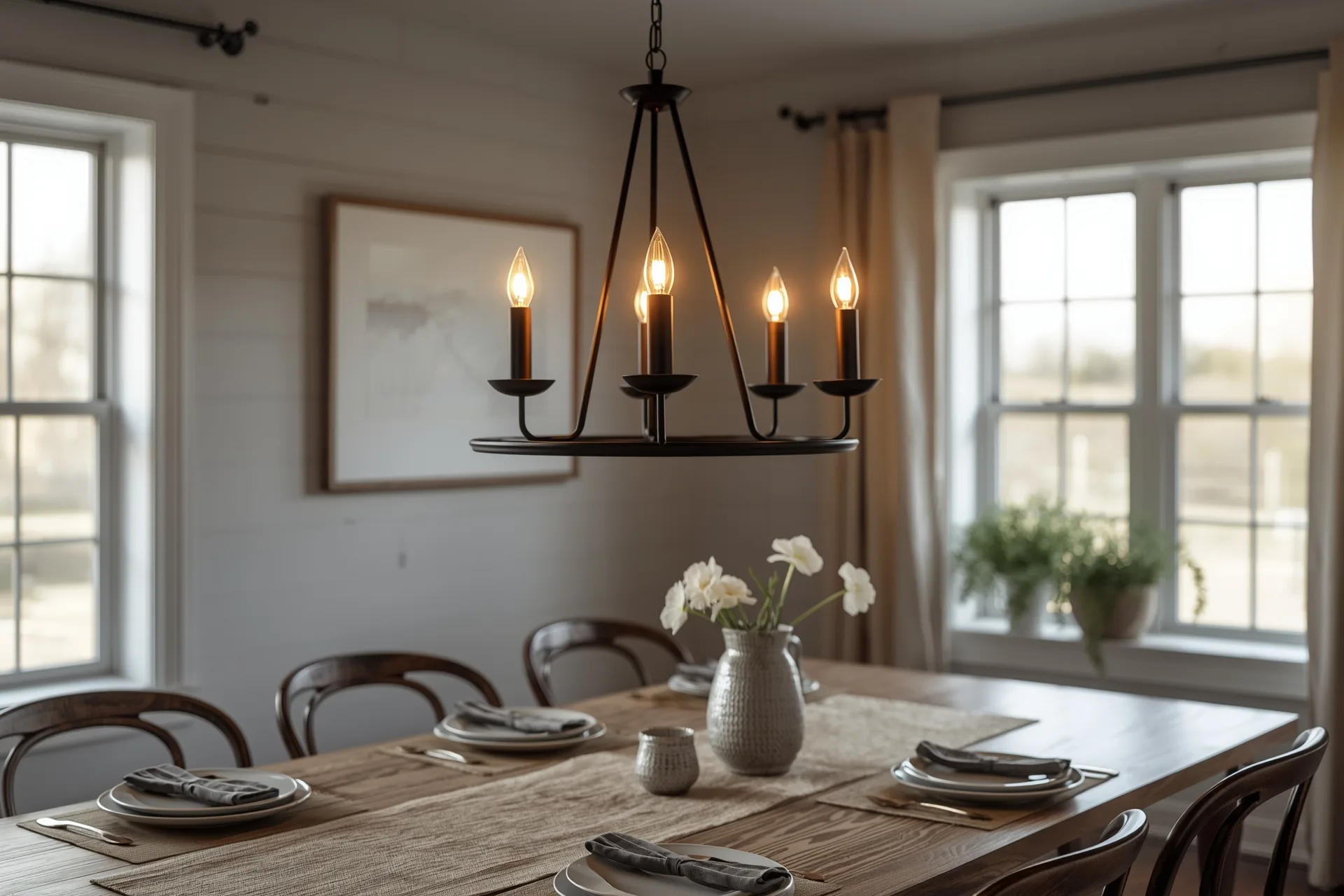
Get the sizing guide Family at dinner beneath a black five-light candle-style chandelier over a farmhouse table

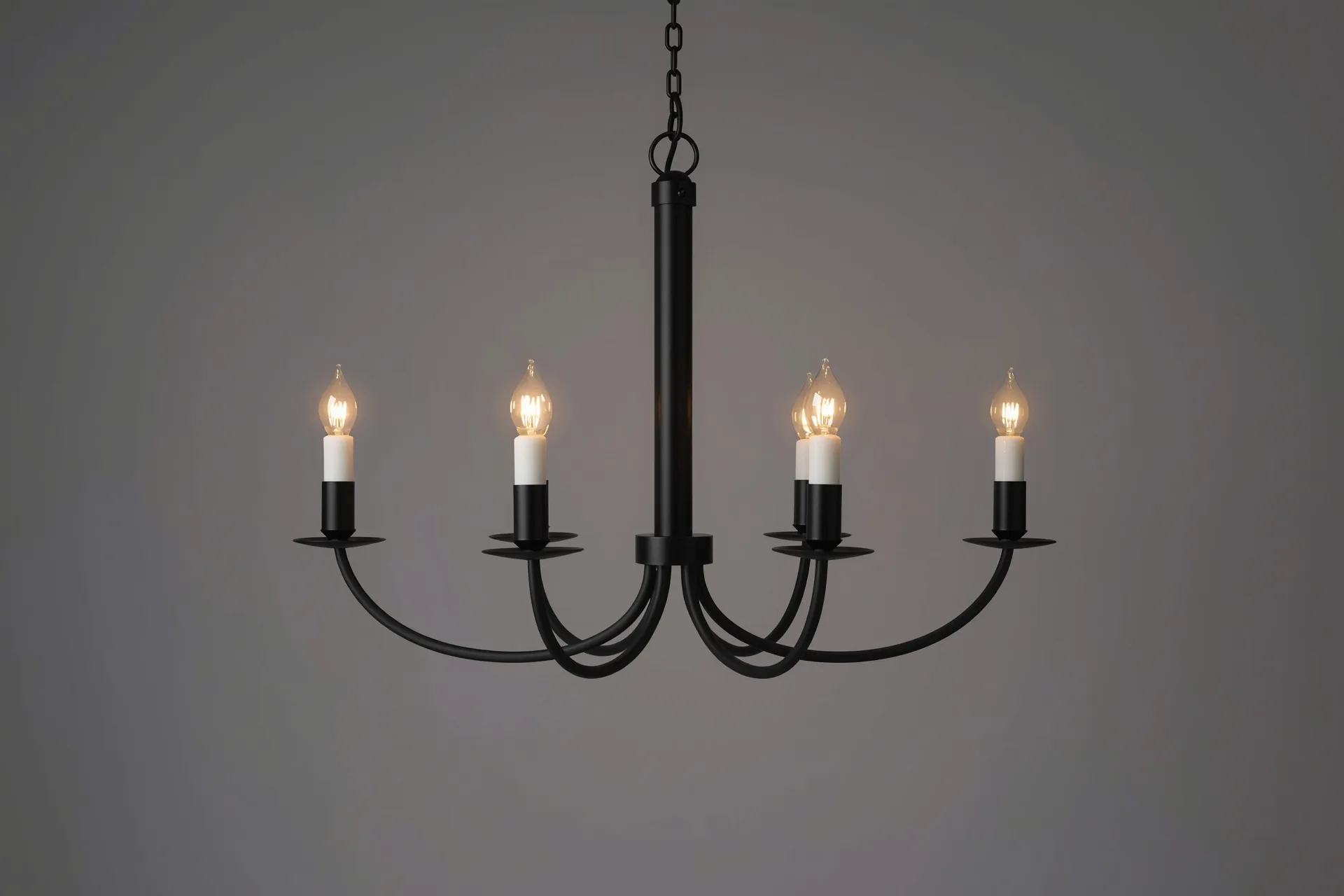
5-Light Black Farmhouse Candle Chandelier

Typical range: $130–260

The dining-room hero: five candelabra sconces on an open matte-black steel frame with rustic wood-tone accents, adjustable chain, and sloped-ceiling-compatible canopy. Medium-to-large band sizing — where the table math lands for most real dining rooms.

  • Matte-black powder-coated open frame
  • Five E12 candelabra sockets, dimmer-ready
  • Adjustable chain for correct hanging height
  • Sloped-ceiling canopy compatibility
  • Wagon-wheel / rustic wood styling for dining rooms
Ask about availability

What defines candle-style — and why it reads farmhouse

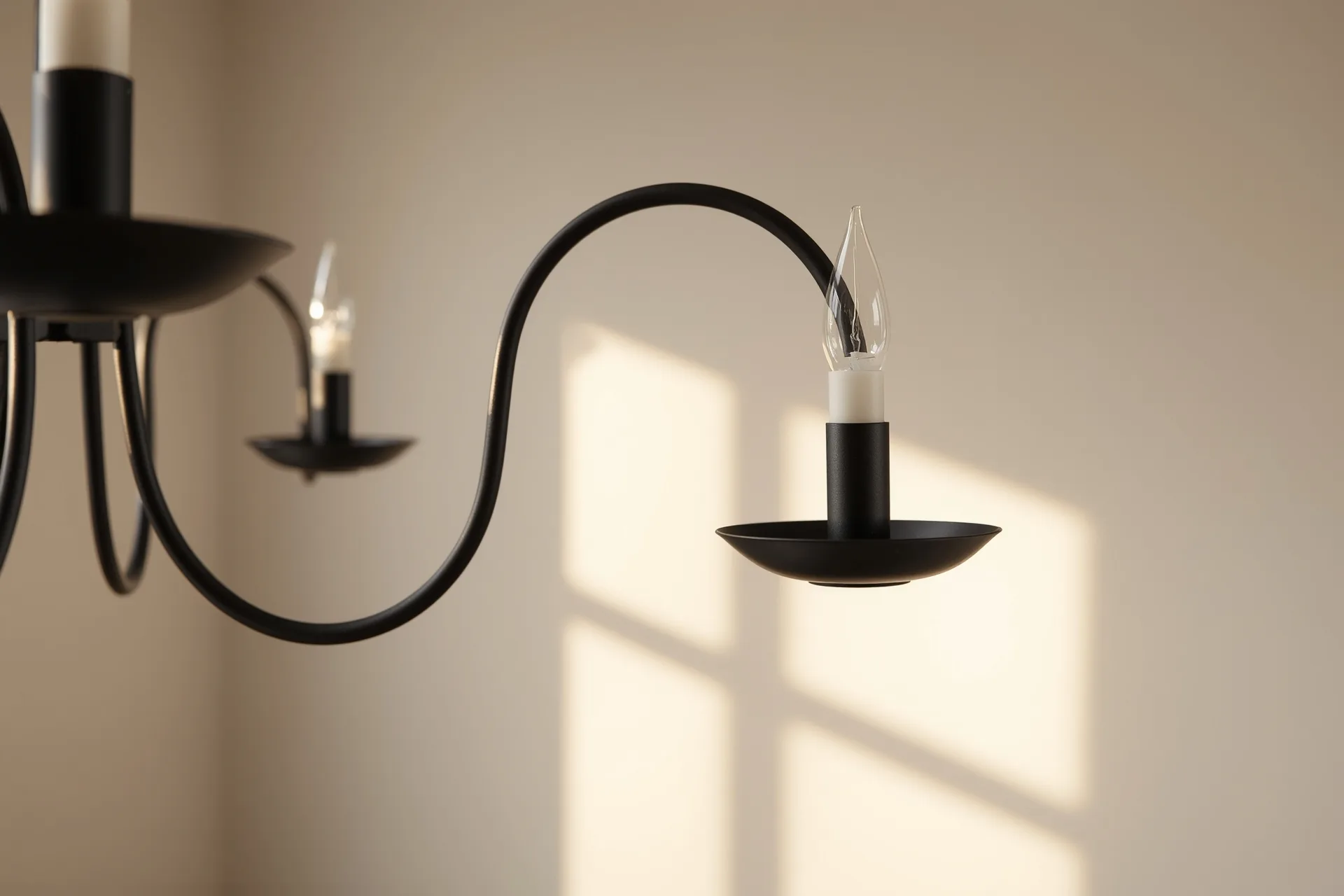
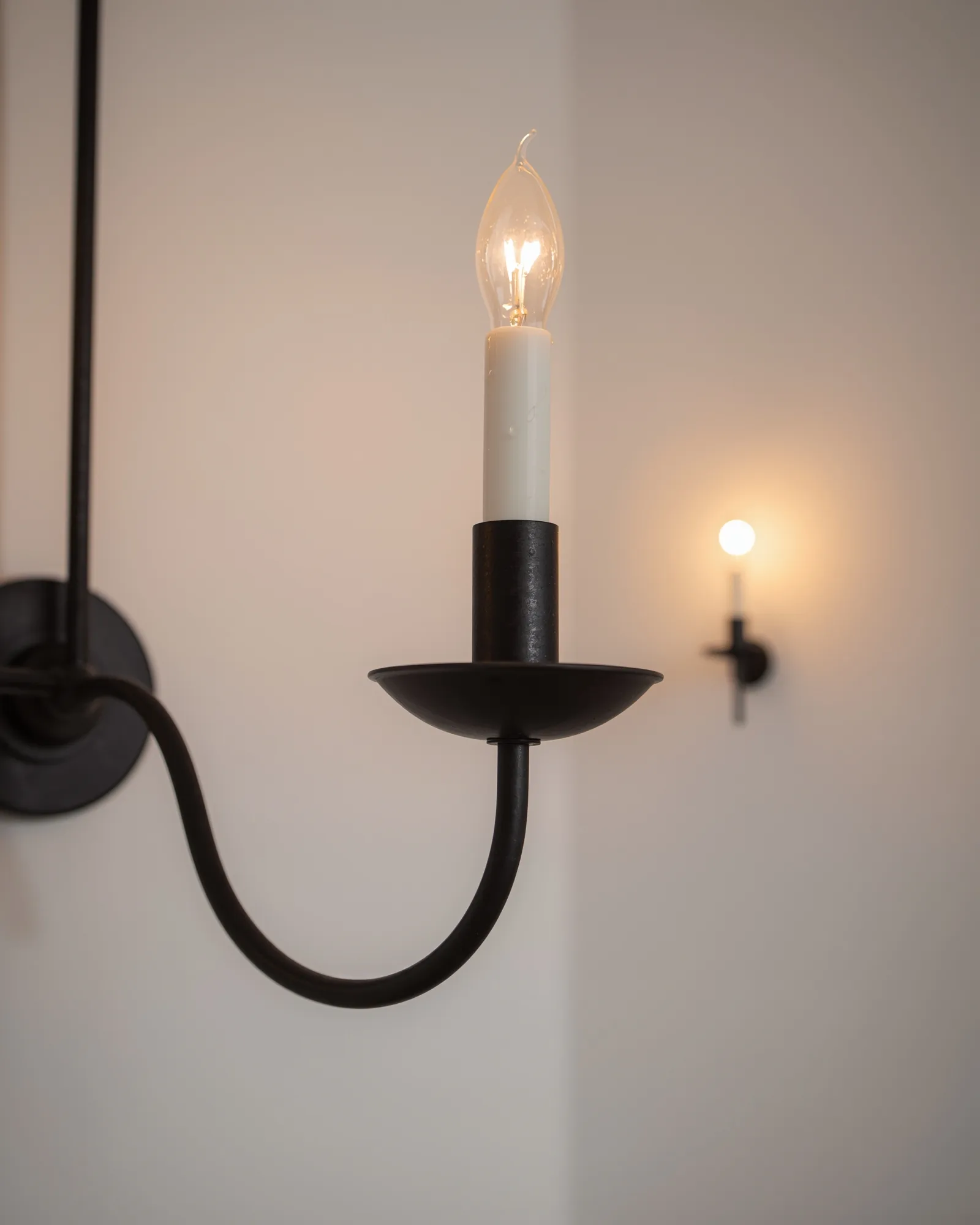
Close-up of black candle-style chandelier arms with faux candle sleeves and warm bulbs

A candle-style chandelier holds its bulbs upright on open sconces, the way a candelabra holds candles — no shades, no drum, no enclosure. The light source is the ornament. On an open metal frame in matte black, the effect is exactly what the farmhouse look is after: honest materials, visible structure, warmth without glitz.

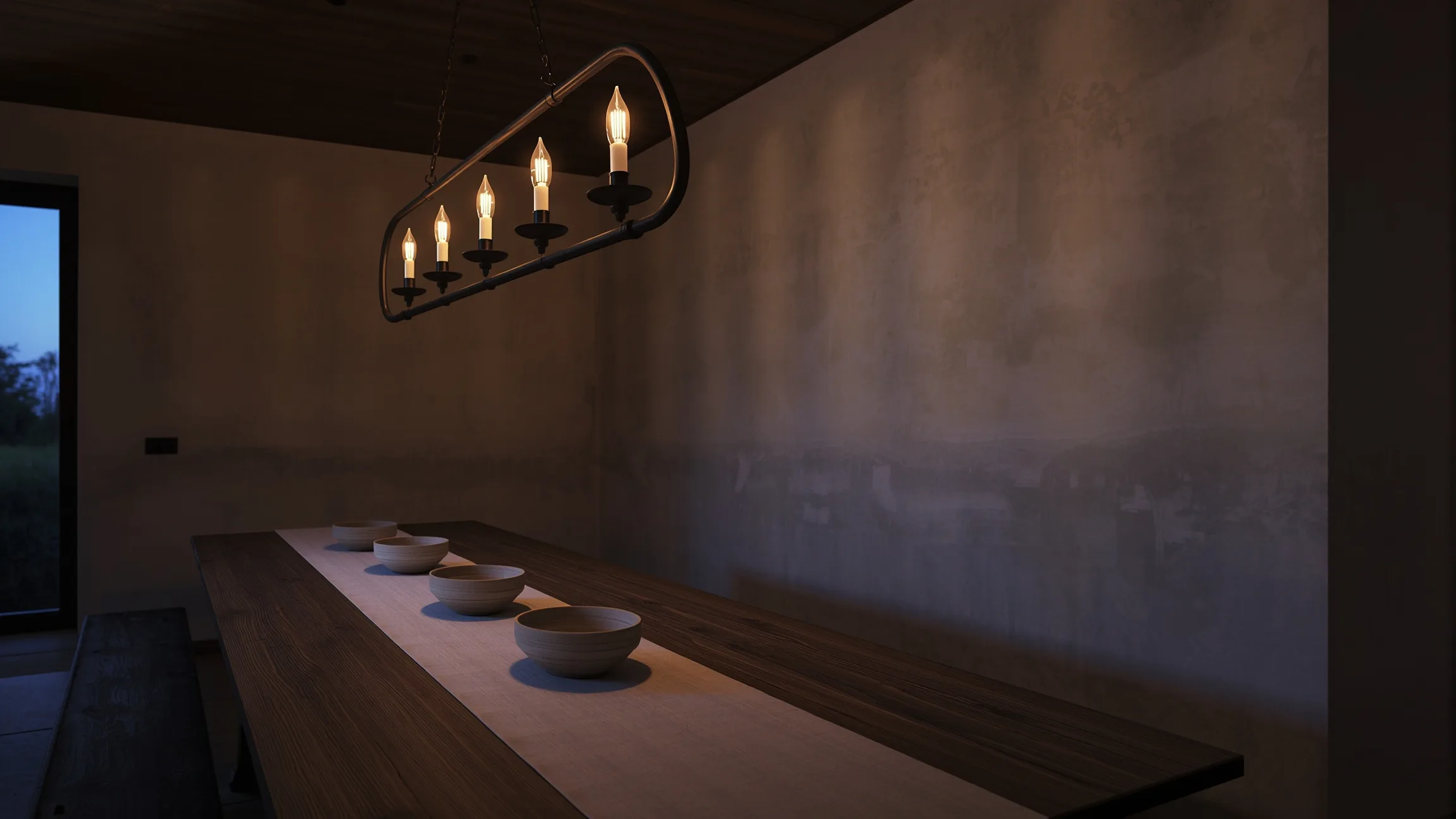
The geometry underneath varies. Wagon-wheel frames set the sconces around a horizontal ring — the most traditional farmhouse silhouette. Open-cage frames build a vertical lantern-like volume that suits squarer rooms and entries. Linear frames stretch the sconces along a bar, the right call over a kitchen island or a long harvest table rather than a round dining table.

Matte black metal with wood tones is the pairing that defines the modern farmhouse palette: the black frame gives the room a graphic anchor, and warm wood — the table below, exposed beams above, oak floors — keeps it from reading industrial. If your dining room leans white-walls-and-wood, a black candle-style fixture is the highest-confidence choice in the entire category.

Five lights is the dining sweet spot. It fills a standard chandelier diameter without crowding the frame, delivers enough light for a table of six with warm bulbs, and divides cleanly on a dimmer between dinner-bright and evening-low.

For the farmhouse-dining renovator

This page is written for the person redoing a dining room, not a lighting hobbyist. You know the look you want — warmth, wood, black metal, nothing shiny — and you need one fixture that delivers it without a lighting-store education. You are wood-and-metal people, not glass-and-crystal people.

The category mostly serves you thumbnails. The one ranking page in this space that carries real guidance also ranks well, which tells you what buyers actually want: answers about size, bulbs, ceilings, and budgets. That is the entire brief for this page.

Where it lives: dining first, then everywhere else

The dining room is this fixture's home turf — centered on the table, not the room, hung low enough to gather the table into its own pool of light. That placement is what makes a dining room feel like a room rather than a corner of an open plan.

It travels, with adjustments. Over a kitchen island, choose the linear variant so the light runs the island's length. In an entry or stairwell with height to spare, an open-cage version fills vertical space that a wagon-wheel cannot. In living rooms and bedrooms it works as a statement piece hung higher; in hallways and baths, the category's mini sizes exist, though at that scale you have left chandelier territory in spirit.

Covered patios deserve a note: an outdoor-rated fixture is a different specification — damp-rated at minimum. A standard interior candle-style chandelier does not belong outside, whatever the thumbnail suggests.

Features that matter, translated

Adjustable chain or downrod: this is not a convenience feature, it is the sizing feature — correct hanging height over your specific table is achieved with it, and the sizing method below depends on it. Check the shipped chain length against your ceiling height before ordering, not after.

Sloped-ceiling canopy compatibility: old farmhouse ceilings pitch and beam. A swivel canopy lets the fixture hang plumb from an angled ceiling; if your dining room has a cathedral or pitched ceiling, treat this as a requirement, not an option.

Candelabra sockets plus a dimmer: candle-style fixtures take the smaller E12 candelabra base in most North American builds, and upright bare-bulb fixtures live and die by dimming — full brightness for homework at the table, low warmth for dinner. Confirm dimmer compatibility of your bulbs; the bulb section below covers the details.

The sizing method: from your table to the right fixture, with numbers

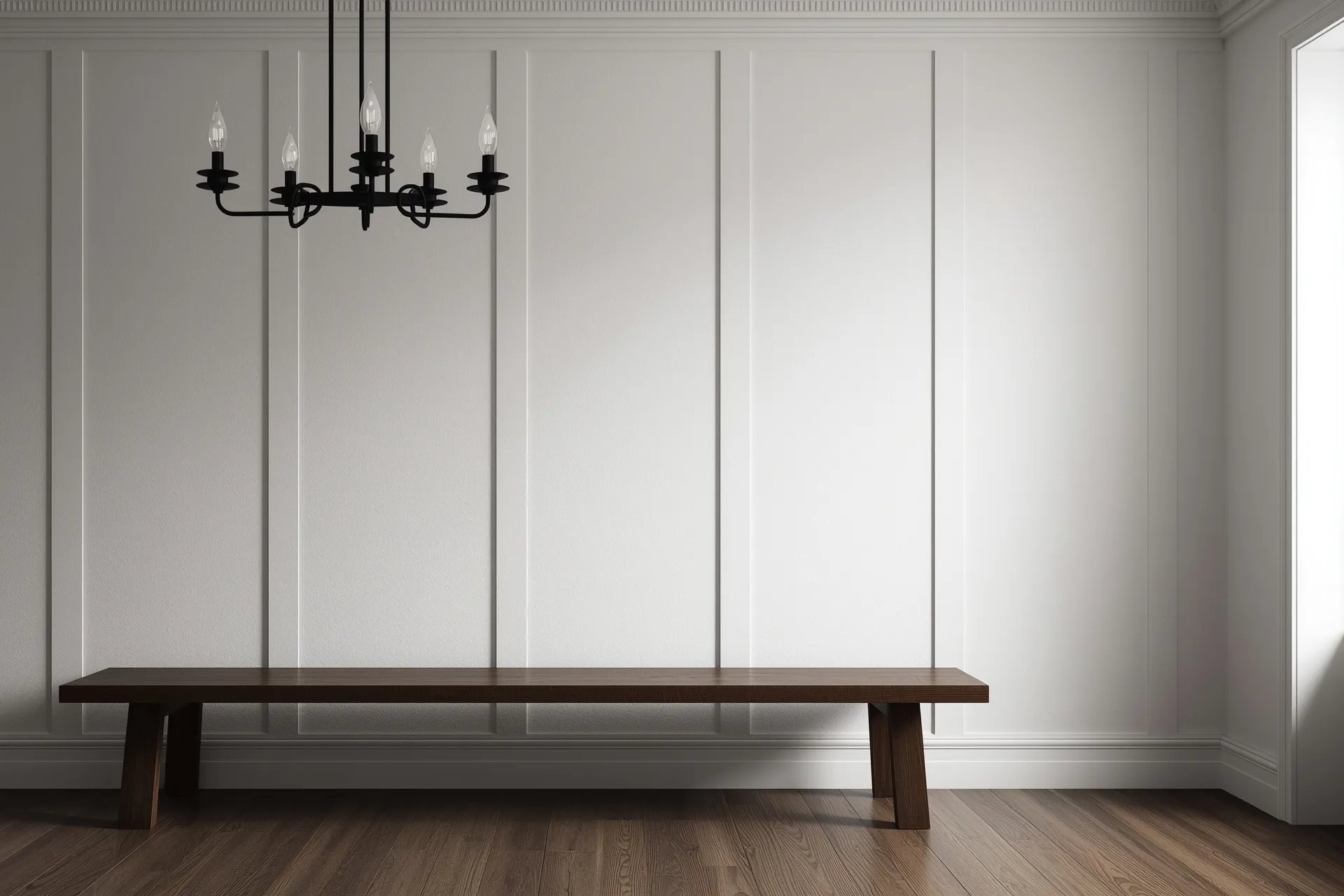
Couple admiring a candle-style chandelier hung in proportion above their farmhouse table

No ranking page in this category publishes sizing as a usable method — one retailer's buyer note (a 36-inch fixture over a 60-inch table, hung 34 inches above) is the closest the entire top of this market comes to guidance. Here is the method in three rules you can apply in five minutes with a tape measure.

Rule one: diameter

Over a dining table, size the chandelier to the table: one-half to two-thirds of the table's width. A 42-inch-wide table takes a fixture between 21 and 28 inches across; a 60-inch round table carries 30 to 36 inches comfortably — which is exactly why that 36-over-60 buyer combination worked.

If the fixture lights a room rather than a table, use the room rule instead: add the room's length and width in feet, and read that number as inches of fixture diameter. A 12-by-14-foot dining room suggests roughly a 26-inch chandelier. When the two rules disagree, the table rule wins — the chandelier belongs to the table.

Rule two: hanging height

Set the bottom of the fixture 30 to 36 inches above the tabletop for an eight-foot ceiling — low enough to gather the table, high enough to keep sightlines clear across it. Add roughly three inches per additional foot of ceiling height: a nine-foot ceiling puts the sweet spot at 33 to 39 inches above the table. This is what the adjustable chain is for; measure from the tabletop, not the floor.

Rule three: know the size vocabulary

Retail sizing runs in named bands: mini fixtures under 14 inches, small from 14 to 22, medium from 22 to 26, large from 26 to 34, and oversized beyond 34. Applied to dining rooms: minis belong in halls and baths, small suits a breakfast nook, medium and large cover most real dining tables, and oversized earns its keep only over large tables in rooms with height. Our five-light hero sits in the medium-to-large band — the range the diameter rules land on for the most common table sizes.

Choosing well in the $130–260 band

The quality markers worth checking at this price: a steel frame with a powder-coated matte finish rather than glossy paint, sconce cups that sit straight on their arms, a canopy and chain finished to match the frame, and hardware for both flat and sloped mounting in the box. Weight is a useful proxy — a well-built five-light frame has noticeable heft.

Real wood accents versus wood-look finishes is an honest fork: genuine oak or distressed-wood elements cost more and vary piece to piece, which is part of their charm; faux-grain metal reads convincingly from dining distance and shrugs off humidity. Neither choice is wrong — one is character, the other is durability.

And the honest trade-off the grids never state: if your room leans coastal or boho, a wood-bead chandelier suits it better than candle-style; if you want soft, even, glare-free light above all, a drum shade delivers what bare bulbs cannot. This page is the authority on one school, and part of that authority is telling you when the school is wrong for your room.

Bulbs: the half of the fixture that ships separately

Bulbs are sold separately across this entire category — usually noted in fine print, never explained. For a candle-style fixture the bulb IS the visible light source, so the choice matters more here than anywhere else in lighting.

Shape first: flame-tip bulbs make the candle silhouette literal; torpedo shapes read cleaner and more modern on a black frame. Either works — mixing them does not. Warmth second: 2700K is the incandescent-warm standard that makes wood tones glow; 3000K is slightly crisper. Do not go cooler than 3000K on a farmhouse fixture — daylight-cool bulbs turn a warm room clinical.

Wattage and dimming: five 40-watt-equivalent LED candelabra bulbs light a dining table generously; 25-watt equivalents suit rooms with other light sources. Buy bulbs explicitly marked dimmable, pair them with an LED-compatible dimmer, and the fixture earns its keep at every hour of the evening.

Coordinating a black fixture with a farmhouse palette

Category pages tag fixtures 'matte black' and move on; here is the actual advice. Matte black against white walls and warm wood is the safest strong choice in interior lighting — the frame reads as line-drawing against the white, and the wood keeps the composition warm. Repeat black at least once more in the room (chair frames, curtain rods, cabinet hardware) so the chandelier looks placed rather than dropped.

With gray-washed or pale floors, add warmth through the bulbs (2700K, always) and textiles. With very dark rooms — deep walls, walnut furniture — a black fixture disappears politely into the composition; decide whether you want the chandelier as accent or anchor, and if it is accent, that disappearance is the point.

Installation and upkeep, honestly

Installation is a standard ceiling-box job: about an hour for a confident DIYer replacing an existing fixture, with the usual non-negotiables — breaker off, a rated ceiling box, and a second person to hold the frame while you wire. Pitched ceiling, no existing box, or any wiring doubt: hire the electrician and enjoy the fixture for a decade instead.

Upkeep on an open frame is refreshingly simple: no shades to wash, no crystals to polish. A microfiber pass over the arms every few weeks and a bulb check twice a year is the entire regimen. LED candelabra bulbs last years at dinner-hours usage, so even that chore is rare.

Frequently asked questions

What size farmhouse chandelier do I need for my dining table?

Size to the table, not the room: one-half to two-thirds of the table's width. A 42-inch-wide table takes roughly a 21–28 inch fixture; a 60-inch round table carries 30–36 inches. The full sizing method on this page includes the room-rule fallback and hanging heights.

How high should it hang above the table?

Bottom of the fixture 30–36 inches above the tabletop with an eight-foot ceiling, adding about three inches per extra foot of ceiling. Measure from the tabletop — that is what the adjustable chain is for.

Can a candle-style chandelier work over a kitchen island?

Yes — choose the linear variant so the sconces run the island's length. A round wagon-wheel frame over a long island lights the middle and shadows the ends.

Will it mount on a sloped or cathedral ceiling?

With a sloped-ceiling-compatible canopy, yes — the swivel lets the chain hang plumb from an angled surface. If your dining room ceiling pitches, treat that canopy as a requirement when you buy.

Is a good farmhouse chandelier possible under $300?

Honestly, yes — the $130–260 band contains well-built five-light candle-style fixtures. Check the markers that matter: powder-coated steel frame, straight sconce cups, matching canopy and chain, and sloped-ceiling hardware in the box.

What bulbs should I use for the candle look?

Dimmable LED candelabra (E12) bulbs, flame-tip or torpedo shape, at 2700K warmth — five 40-watt equivalents for a generously lit table. Avoid cool-white bulbs; they undo the farmhouse warmth entirely.

Does matte black work if my room is mostly white and light wood?

That is the combination it works best in — the black frame reads as a graphic anchor against white walls, and the wood keeps it warm. Repeat black once or twice elsewhere in the room so the fixture looks intentional.

Get the full sizing guide

The diameter and hanging-height worksheets, plus first word on availability and pricing for the five-light hero.